


Show Main Menu 

Show Main Menu
New Year's Around the World: Asia, Europe, Latin America
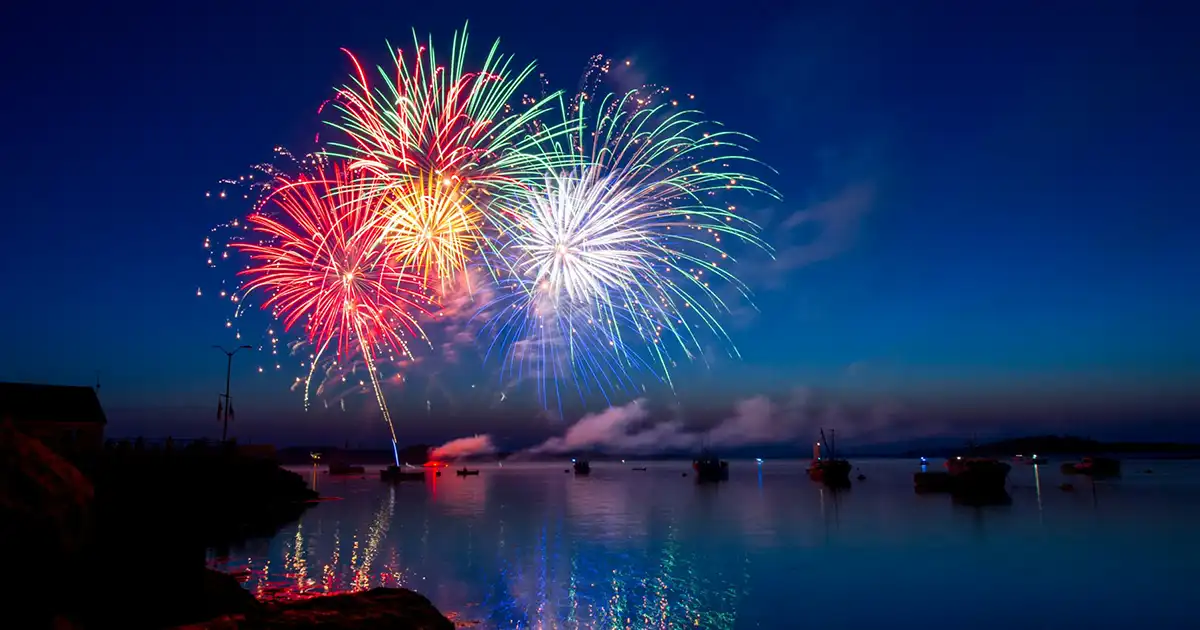
New Year’s is a season for love. Plenty of singles are resolved to meet someone new and enter meaningful relationships.
Like them, why not create a romantic fresh start? Celebrate New Year’s abroad!
Starting the year in a new place is different from simply celebrating it at home. You break free from your routine, meet people outside your locality, and gain new perspectives.
But if there’s one thing you should keep in mind, it’s this: we all have different ways of celebrating new beginnings.
That said, here’s how New Year’s around the world is celebrated:
New Year’s Celebrations in Asia
Most Asian countries celebrate New Year’s by gathering with their family, feasting, and setting off fireworks. But here are holiday traditions that set some countries apart:
China
China follows the Lunar calendar, making the New Year fall on either late January or mid-February. Many traditions revolve around gift-giving and building good luck for the rest of the year.
Red Envelopes
This tradition centers on children. Adults in the family give them red envelopes filled with money to wish them good luck, happiness, and prosperity. But you can also hand these out to your matches.
The amount in the envelope can vary, but the bills should be clean and crisp. You don’t necessarily have to hand out traditional paper ones. With today’s technological advances, you can send digital red envelopes via certain apps.
Traditional Gifts
Say you’ve matched with a Chinese woman and agreed to date each other. She invited you over for dinner with her parents and extended relatives. Don’t come empty-handed.
Bring gifts, such as health supplements, alcohol, tea, fruits, and edible bird’s nests. Remember to buy at least two of each, as Chinese people believe that good things come in pairs. Wrap them in red and gold, which symbolize luck and wealth. Avoid gifts that they believe are unlucky or malicious.
Thailand
Thailand’s official New Year celebration is on January 1. But the most famous and widely celebrated New Year is in mid-April. The holiday is called “Songkran,” which refers to the astrological passing of the sun into the Aries constellation.
New Year’s around the world usually involves some religious traditions. But it’s much more apparent in Thailand.
Water Splashing
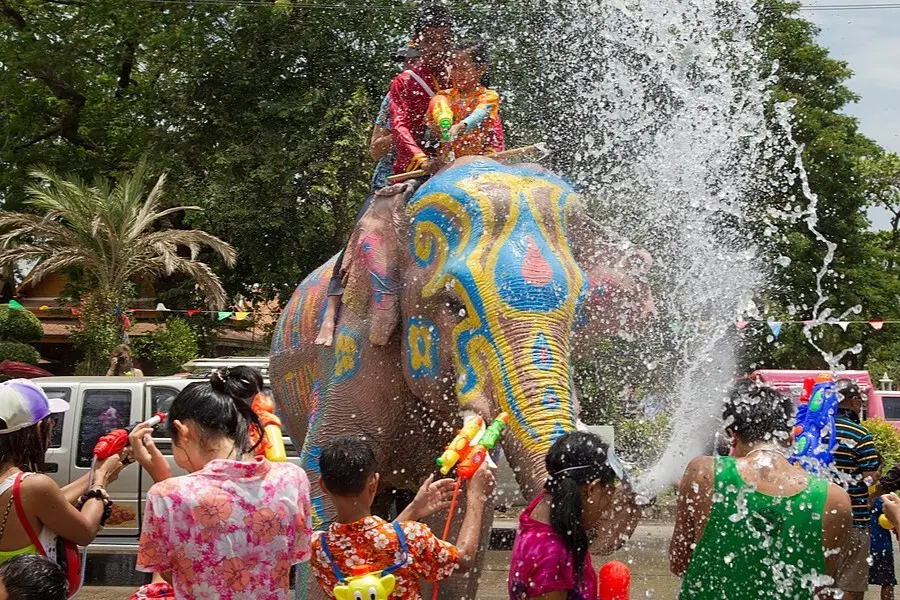
This act symbolizes cleansing and renewal. People splash water on each other to wash away their sins and misfortunes from the past year and usher in new beginnings. But don’t just expect light splashes. Songkran celebrations are like lively battlegrounds. Imagine full-on water fights, with people wielding buckets, hoses, and water guns.
Songkran provides a fun, casual environment for dating. But be cautious of your match’s personal boundaries. Avoid unwanted or aggressive behavior, especially if they seem hesitant to participate in the festivities.
Temple Visits
Thailand has over 30,000 active Buddhist temples. In the New Year, people begin their day by visiting their local temples. Some even aim to visit nine major temples in one day, including Wat Pho, Wat Arun, Wat Benchamabophit, and the Rama IX Golden Jubilee Temple.
Worshippers pay their respects to Buddha, offer food, and pour water on monks’ hands to ask for blessings. Even if you’re not religious, it’s worth being mindful that such ceremonies are happening.
Changes made: cropped
Philippines
New Year’s in the Philippines is officially dated on January 1, but the festivities begin on the eve of December 31.
The holiday traditions are a mix of indigenous, Spanish, and Chinese influences. This is due to colonialism and migration. Moreover, they’re usually loud and feature plenty of food.
Loud Greetings
In the U.S., Americans greet the New Year with a grand fireworks display. The same happens in the Philippines, although it’s more chaotic.
Aside from fireworks, Filipinos also bang their frying pans or pots and blow trumpets or horns. The practice is rooted in Chinese influence.
The purpose of this tradition is to scare away evil spirits. Now, however, the colorful visuals and startling sounds are mainly for entertainment.
Media Noche
This is the New Year’s version of the Christmas feast (Noche Buena). It’s eaten before and at midnight, and features 12 varieties of round-shaped fruits as its centerpiece.
Filipinos believe that round symbolizes prosperity and fortune, so round fruits and cakes are a must-have on the table. Aside from these, families also prepare pancit (for long life), lechon (for abundance), and green vegetables (for financial stability).
Media Noche is often a family affair. If you’re dating a Filipina, bonding with her parents and relatives over food is the perfect opportunity to get to know them.
New Year’s Celebrations in Europe
New Year’s around the world usually lasts for just one or two days. But this isn’t the case in European countries like Russia and Ukraine.
Russia
New Year’s in Russia is a two-week-long holiday. People celebrate starting on the eve of December 21 until January 10. The reason for this long celebration is due to their two calendar systems.
Russia initially used the Julian calendar, where the New Year fell on January 14. But in 1918, the country switched to the Gregorian calendar, moving the New Year to January 1. However, the church continued to use the former, and the people followed, resulting in an extended holiday.
Wishes on Paper
Many Russians consider this a magical tradition. Right before midnight, everyone writes as many wishes as they can on separate paper. Each member also prepares a glass of champagne. Once midnight strikes, they burn their papers, pour the ashes in their glasses, and drink it together with their champagne. The rule is to finish the drink before midnight passes.
If you can, your wish will be granted sometime within the new year. If not, Russia has eight time zones. There are multiple opportunities to make wishes and ensure they’re granted. This is quite a good time to wish for some progress in your love life.
Russian Salad
New Year in Russia is incomplete without Olivier salad on the table. The ingredients typically include diced potatoes, carrots, hard-boiled eggs, diced meats (often ham, bologna, or chicken), pickles, green peas, and onions. They’re then mixed with mayonnaise and seasoned with salt and pepper. It seems nothing out of the ordinary, right?
Well, that’s because that’s the modern version. ITMO News states that traditionally, Olivier salad was made with veal tongue, crayfish, and caviar. All credit to these high-quality ingredients goes to Chef Lucien Olivier, who first created this dish as a gourmet delicacy.
Ukraine
Ukrainian and Russian New Year celebrations are quite similar. But instead of a two-week-long holiday, Ukrainians simply celebrate twice—first on January 1 and second on January 14.
Exchange Gifts
In the West, gift-giving usually happens on Christmas. People circle around the tree, hand out their gifts, and unwrap them right then and there. But the Christmas decorations in Ukraine don’t immediately come down after December. That’s because the New Year is the primary winter holiday.
Ukrainian homes are still decorated with garlands and brightly colored lights. The tree is still up, and on New Year’s Eve, people exchange gifts.
(Fun Fact: Ukrainians don’t believe in Santa Claus. Instead, they believe in Grandfather Frost. They’re both gift-giving figures, but their appearance slightly differs.)
Dress-Up Ritual
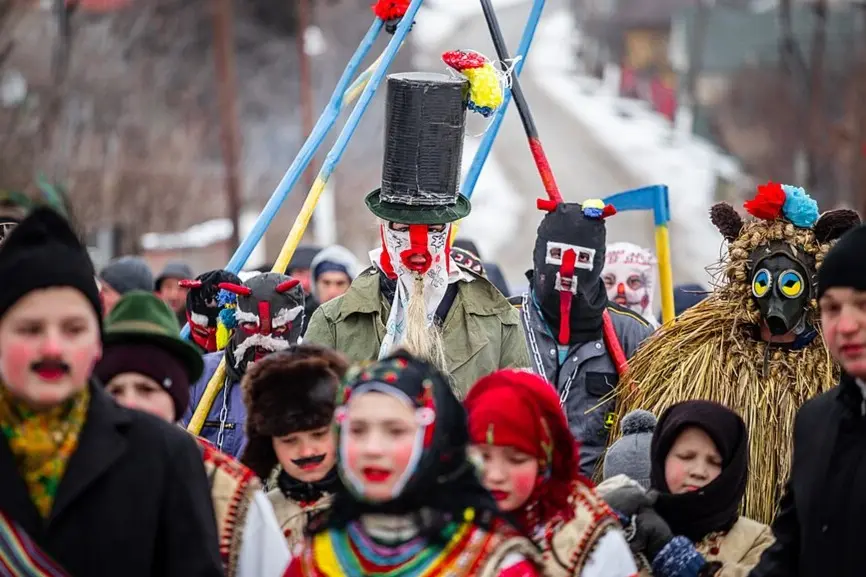
According to Rubryka, Ukrainian New Year’s Eve is also called the Generous Evening or Malanka. It’s based on a legend, where Malanka, the daughter of the moon, brings renewal to the people. At this time, one person in a group dresses up as her, smearing their face with soot. Others dress up in handmade costumes or masks of animals and other folklore characters.
Recently, however, Ukrainians have adopted a more modern version, dressing up as characters and even political figures.
If you wish to participate with your Ukrainian date, just make sure to be respectful. Learn the legend beforehand. Or, if you’re going to dress up as a character or figure, ensure that it isn’t offensive.
Changes made: cropped
New Year’s Celebrations in Latin America
Like New Year holiday traditions in America, celebrations in Latin America highlight community and social opportunities.
Costa Rica
New Year’s is a good time to have a drink with family and friends. But in Costa Rica, you might struggle to find a pub that’s open. Rather than being a bummer, it’s an invitation to spend the holiday differently.
Fiestas de Zapote
Technically, this festival isn’t exclusive to the New Year. It starts on the afternoon of December 25 and runs until January 5. It’s not your typical date activity, either. But Costa Ricans’ celebrations aren’t complete without it.
It’s held in San Jose. The main highlight? Bullfights! Unlike Spain’s controversial version, however, the Costa Rican one is comedic. Volunteers enter a ring and try to dodge a charging bull with silly stunts.
Beach Parties
Can you really say you spent New Year’s abroad if you didn’t go out to drink and dance with the locals? Fortunately, Costa Rica throws some of the best parties.
In Tamarindo, for example, locals throw a full-on beach party, including bonfires, dancing, and fireworks. The setting is perfect for mingling with locals.
Colombia
In Colombia, the New Year acts as a blank slate. It’s an opportunity to fill it with hopes and dreams for a better future. Many holiday traditions center around fulfilling personal and collective happiness.
Suitcase Run
To ensure a year full of adventure, locals grab an empty suitcase and run around the house (taking the first step with their right foot) when the clock strikes midnight. Some even run a full lap around their neighborhood to ensure their wish will come true.
This tradition symbolizes opening new doors and manifesting new journeys. As a traveler, it’s something worth considering.
12 Grapes
Each grape symbolizes your wishes for each month of the year. If you hope to have a meaningful relationship, this is the best time to voice it to the universe.
You eat one grape per chime at midnight. Since downing them (especially huge ones) isn’t easy, finishing them means you’ll have good luck throughout the year.
However, if the grapes are sour, you may face potential obstacles ahead.
Mexico
Most Mexicans start the New Year at home. It’s not because there aren’t any events outside. Rather, they prefer to celebrate a new beginning with their families and friends. Later, the festivities spill out into the street.
Dinner Parties
In the capital, Guadalajara, and Monterrey, hotels and resorts often host dinner parties. These usually include live music, dancing, and other forms of entertainment. Guests who aren’t staying at the hotel or resort are welcome to participate. But often, families would book rooms in these locations to conveniently crash after the celebrations.
Civic Events
These are public festivities in the central plaza. The details and arrangements depend on the town or city. But it usually includes food and drink stalls, live performances from singers and dancers, and other forms of street entertainment.
If you’re looking for a New Year’s date, such events are a great environment. With all the activities happening around, you can easily start conversations and build shared experiences.
Ready to Spend Your Holiday Abroad?
Every New Year is a time to become better. With the lessons you’ve learned in the past year, you’re able to create better opportunities and experiences.
That said, take all you know about dating and start a new journey in love abroad. And now that you know how New Year's around the world is celebrated, are you ready to book your trip?
Frequently Asked Questions
What is the purpose of red envelopes during Chinese New Year?
Red envelopes with clean and crisp money are traditionally given by adults to children during the Chinese New Year. They symbolize wishes for good luck, happiness, and prosperity.
What is the main meaning behind Thailand’s Songkran water splashing?
Songkran symbolizes cleansing and renewal. Thais believe that splashing water can wash away their sins and misfortunes from the past year, ushering in new beginnings for the new year.
Why do Filipinos make loud noises on New Year’s Eve?
Filipinos make loud noises, such as lighting fireworks and banging pots, during New Year’s Eve. The practice is rooted in Chinese influence and is meant to scare away evil spirits. Nowadays, the practice is mainly for energetic celebration and entertainment.
Why do Russians burn wishes on paper and drink the ashes?
Russians believe that if they burn their wishes, mix the ashes into champagne, and finish the drink before midnight passes, the wish will be granted in the new year.
What is the significance of the 12 grapes tradition in Colombia?
The 12 grapes tradition involves eating one grape per chime at midnight, with each grape symbolizing a wish for each month of the new year. Finishing them is thought to bring good luck throughout the year.
When is the actual date for the Chinese Lunar New Year?
The Chinese Lunar New Year typically falls in late January or mid-February, as it follows the lunar calendar. This means the date changes annually, unlike the January 1st celebration.
What is Media Noche in the Philippines?
Media Noche is the Philippines' New Year's Eve feast, similar to Christmas Eve’s Noche Buena. The meal’s centerpiece must include 12 varieties of round-shaped fruits for prosperity and fortune.
Do most European countries celebrate New Year for multiple days?
No, the extended holiday is specific to a few, like Russia and Ukraine, due to using both the Julian and Gregorian calendars. Most European New Year's celebrations last for only one or two days.
What is the key difference in Costa Rican bullfights?
Unlike the controversial bullfights in Spain, the Costa Rican version held during Fiestas de Zapote is comedic. Volunteers enter the ring to perform silly stunts while dodging a charging bull.
References
“Songkran Festival Thailand: Thai New Year 2025 | Blog | Travel tips, advice and inspiration.” 2025. Explore Worldwide. https://www.exploreworldwide.com/blog/visiting-thailand-during-the-songkran-new-year-festival.
Pinto, Anya. 2023. “Russia’s Old New Year explained: I SPI.” iPatriot Post, January 27, 2023. https://ipatriotpost.com/russias-old-new-year-explained-i-spi/#:~:text=In%20Russia%2C%20winter%20break%20ends,Year%20on%20the%20Gregorian%20calendar.
Belyaeva, Marina. 2022. “5 Surprising Facts About Russian New Year.” ITMO.news, December 27, 2022. https://news.itmo.ru/en/features/life_in_russia/news/12988/.
Voronina, Oleksandra. 2024. “Five unique Ukrainian New Year traditions you need to know.” Rubryka. https://rubryka.com/en/article/ukrainian-new-year-traditions/.
East, Mike. 2024. “Zapote Festival, (Las Fiestas de Zapote), Costa Rica.” Travel Begins at 40. https://www.travelbeginsat40.com/event/zapote-festival-las-fiestas-de-zapote-costa-rica/.
Newest, beautiful, single women now added for week of Wednesday, 14 October, 2026 - Tuesday, 20 October, 2026
You have to meet the women to marry them! What other international dating site offers you numerous opportunities to do that?
GENERAL TIPS & INFORMATION
Contact Information

This program is the sole property of A Foreign Affair and may not be copied in any way or form without express permission from A Foreign Affair.


© Copyright - All Rights Reserved. | A-Foreign-Affair